Just in time for the NCAA Playoffs, Fab Five teammate and NBA great Chris Webber visits Grady High School and talks to the students about living their dream.
Chris Webber knows about dreams. His dream was to play in the NBA. But he knew it wasn’t enough to dream. He had to work hard. Chris knew that he had to grab his dream and make it real. He needed a plan.
That’s the message Chris Webber brings to the Grady students. It’s important to have dreams, but dreaming is not enough. If you want to make your dream real, you need to put a process in place. Attaining your dream is hard work.
He says that you need to be smart enough to know what you want to do and and learn the process of knowing how to get there. He invites students to share their dreams and gives them practical advice about how to start.
Chris Webber had a dream. Because he cultivated it, believed in himself, followed his plan, and built relationships, his dream became a reality.
Chris Webber’s talk is for anyone who has a dream and wants to know how to follow it.
You have everything inside you to make your life happen.
For further study, including viewing the entire lecture, following a lesson plan, and providing feedback, follow this link.
Welcome to our new website and our first blog post! We hope you’ll find this site a valuable resource and tool. This new site gives us an updated look and feel and is also easy for us to update. This means that we’ll be able to add fresh news and information on a regular basis.
If you have any questions or comments, please let us know on our contact page. If you would like to make a donation, please visit our donate page.
Cole Parker, founder of Divas in Defense, a women’s self-defense class, discusses the importance of learning from difficult situations and always remaining open to new opportunities.
A Marketing Guru and Serial Entrepreneur, Cole is Atlanta’s go-to-guy for Small Business Development and Re-branding. Cole implemented the Get Paid to Kick Butt campaign for aspiring entrepreneurs to operate the Divas In Defense system in their area. He is also a prominent advocate for women’s safety.
Cole is a business consultant with experience in all types of entity structure. The company he owns, CORPorLLC.com, assists with formation, marketing, branding, consulting and administration for Profit Corporations (C-Corp, S-Corp); Non-Profit Corporations (501c3, Grant Writing); Limited Liability Companies. They also develop business plans, provide grant writing, corporate credit information and corporate identity.
Cole Parker talks about his career as self-defense instructor and how your career path may take you in different directions so long as your are moving forward.
DISCUSSION QUESTIONS:
-A big part of Cole’s presentation concerned taking away positive things from difficult situations. This is not always easy- how is this directly related to what he said about self-love and being aware of one’s surroundings?
-Why is it advantageous to have fluid, changing goals as opposed to fixed ones? How has this helped Cole? How can it help you?
-When discussing the McDonald’s example, Cole mentioned that Ray Kroc viewed himself as being in the real estate business. How is this type of outside the box thinking helpful in business? What are some ways in which Cole or other speakers have used this type of thinking?
-The qualities Cole tries to instill in his self-defense students- awareness and belief in oneself- are essential life skills. How is this defensive mentality useful and valuable in other aspects of life?
Suzy Blough, a longtime worker in the field of international education, discusses the importance of understanding each other’s differences, actively seeking new experiences, and pursuing one’s passions.
About Suzy Blough
Suzy Blough
Career: International Educator
From: Atlanta, Georgia
Education: Bachelor of Arts from Emory University, Master of Education from University of Georgia
Bucket List: “Take a stab at stand-up comedy!”
Suzanne (Suzy) Blough has spent the past 25 years dedicating her life to the field of International Education and exchange. She has worked with many universities including the University of California, Irvine, and the University of Georgia immersing herself with imparting international awareness to students across the US. She was a part of A Semester at Sea which is a floating study abroad program that travels around the world educating about the international world.
Suzy is currently assisting two former “Lost Boys” of Sudan with a documentary that shows them fleeing 1,000-mile by foot from Southern Sudan to Ethiopia and Kenya. She hopes the documentary will not only bring awareness of the plight of the all Lost Boys of Sudan, but also raise funds to build schools and health care facilities in the area.
Suzy has been married to her husband Doug, a professor at Georgia Tech, for 20 years and they have two teenage daughters.
Further Study
SYNOPSIS:
Suzy Blough, a longtime worker in the field of international education, discusses the importance of understanding each other’s differences, actively seeking new experiences, and pursuing one’s passions.
KEY POINTS:
-3:21-5:06: Suzy discusses how her personal background affected her choice of career.
-8:20-9:02: Here, Suzy explains why it’s valuable to be familiar with different countries and cultures.
-17:39-19:33: In this clip, Suzy shares her personal experiences and the importance of pursuing new opportunities.
-23:21-27:00: Suzy reads an inspirational passage from one of the Sudanese Lost Boys and sums up her main ideas.
DISCUSSION QUESTIONS:
-Suzy emphasizes embracing life’s unpredictability and pursuing one’s current interests. Why is it important to be flexible? How is this related to career success?
-Why is it important to understand cultural differences? How is this related to genocide and the Holocaust?
-The Lost Boys’ story is both tragic and inspirational. Why is it valuable to be mindful of such events? How does their story help others?
-When discussing how she became involved in the documentary project, Suzy mentions that the skills she developed elsewhere helped prepare her for a completely new project. What does this say about a wide range of experiences? How is this related to studying abroad?
John Paul Engel is an internationally known marketing strategy consultant, speaker, and author. He has worked in 12 countries for Fortune 500 companies, emerging businesses, and the Japanese Government. He began his career on the research staff of the Federal Reserve Board where he prepared briefing materials for then Chairman Greenspan and other members of the FOMC.
John is a Phi Beta Kappa graduate of the University of Iowa where he earned the Collegiate Scholar Award, the university’s highest honor. He went on to earn an MBA with an International distinction from the University of Chicago Booth School of Business. John is frequently sought out expert by the national business press including the Wall Street Journal, Inc, US News and World Report, CIO Asia, MSNBC, CBS Money Watch, and over 48 other media outlets.
John is the founder of the consulting firm Knowledge Capital Consulting and two nonprofits; The Siouxland Triathlon Club and Project Be The Change.
What really stood out to me was the point you made about helping someone when you’re lost. Right now I just feel lost because I have no clue where I will be in a few months. Now I know that I can fill that void by helping others, so that’s what I’m going to try to focus on.
You have inspired me to become a better student and to work harder to achieve my goals
You have inspired me to set high goals and pursue them.
I’m now inspired to go out and do whatever I want to do! I thank you for that!
It was great and very inspiring.
You have taught me to solve the biggest problems in my life and to make connects.
You were very interesting and I learned a lot from you.
Today you inspired me to chase my dreams.
Thank you for the motivation, you seem pretty cool.
I’m going to start helping out more people and believing in myself more.
Steve Shlansky, founder of GO! Productions, tells a group of Grady High School students the story of how he created his firm and how he overcame obsticles in his career by always keeping a hand in the craft that he loves.
Theater was the answer to Steve Shlansky’s success. Over the course of his career he realized that in order for him to be successful, he had to be doing something that he loved.
He told the students at Grady High School that his life was anything but a linear one. Like everyone he had his highs and his lows but in the end he always came back with one answer: theater
Pulling the student’s into his presentation he flashed huge rallies that his marketing company GO! put together. The students watched in somewhat wonder as to how anyone could make such an everyday product (such as Lowe’s, which GO! represents) look so grand.
In Steve’s charismatic personable recounting he told the students of his day’s realizing something was missing as an engineering student at Cornell, his years working the New York theater scene, his life selling vending machines, and eventually how he came to be the CEO of one of the most successful corporate events and marketing agencies.
Steve drove the message home that in order to be successful you have to tap into something that makes you happy and gives you motivation and satisfaction. While for him that was theater, he made it clear that for everyone it is something different.
Education: BS from Cornell University, School of Engineering
His drive: Theater
Steve is founder and CEO of GO!, a creative corporate events and marketing agency headquartered in Atlanta. He has more than 30 years experience in the entertainment/production industry, and still gets fired up every time the curtain rises on a GO! project. Over the course of his career, he has produced hundreds of high-profile events around the world for numerous Fortune 250 companies such as Mercedes-Benz, the Coca-Cola Company, Avon Products and Lowe’s Companies. As CEO today, Steve’s number one job is maintain and cultivating GO!’s entrepreneurial culture. He believes that the key to GO!’s success in the production and marketing business is it firm commitment to consistently deliver clients with the best possible return on their communication investment. This, in turn, depends on keeping a creative culture that is uniquely innovative, collaborative, and fun. As he puts it, “GO! specializes in attracting and retaining the industry’s top talents. And then gives them the opportunity to deliver their best works to clients.” Steve has built his career on his strong background in production, which includes an early seven-year sting in the New York theater scene, and extends all the way back to the school plays and summer stock of his youth.
Your story taught me that life has a few bumps but with hard work and by “Staying in the Game” you can be successful.
Your speech really resonated with me more than any other speaker. Faced with making decisions about college and my future, I’ve found that I don’t know what I want to do. Your story will have a positive influence on my decisions.
As a thespian, it was quite interesting to hear about your experience in the theater and how it guided you through your life.
Your presentation was great and you gave me another idea choice for my future.
You actually inspired me because I want to do something in the same career field.
Your job field sounds very interesting to me and something I may want to do.
Your presentation really helped me to get another point of view on what I want to do in life.
You really enlightened my friend Thomas.
You have definitely given me a new interest in marketing.
You have definitely given me a new interest in marketing.
Today was a great day when you came out and shared some great messages with us.
Your presentation really inspired me to pursue what I love to do.
When you talked about actors and relationships, I totally agree with you.
You told us to never give up and find something we love and stick with it.
SYNOPSIS:
Steve Shlansky, founder and CEO of GO!, details his nonlinear path to success, and how he achieved this success by a strong commitment to personal integrity and following his passions,
KEY POINTS:
-4:43-5:27: Steve explains the most important part of creating an advertisement.
-10:00-14:15: Steve shows an example of what his company does best: Tyler Perry’s party to open his Atlanta movie studio.
-25:05-28:26: Steve uses his experience in theater to demonstrate finding motivation from one’s passions.
-35:30-39:04: Here, Steve re-emphasizes the circuitous nature of his journey; after leaving theater again, he found himself again unhappy until he pursued his passions once again.
-40:47-44:55: In this segment, Steve talks about the importance of integrity, hard work, luck, and applying the lessons from one’s past in order to take advantage of new circumstances.
-48:37-49:30: Steve reiterates his main point: find and follow your passions, work hard and with integrity, and success will follow.
-51:46-55:00: Here, Steve reflects on the variety of different experiences along his journey and how all of them have helped shape him into who he is today.
DISCUSSION QUESTIONS:
– Steve found his path to success by following his passion. How is this approach, pursuing one’s passions, similar to the definitions of “success” that some of the other speakers have emphasized?
– Why is integrity so integral to success? Why will a lack of integrity prevent one from being truly successful, even if one can achieve financial success?
– Steve emphasizes that he pursued his passion, but the work he does today is not “theater” in the strictest sense. What does this say about passion? Are there ways to apply aspects of one’s passions to other fields?
– Why do you think Steve emphasized the non-linearity of his path? What does this say about life’s predictability in general
“It isn’t about the money,” said Tonya Freeman. “It’s what you want to do in life, if you’re a happy person then you will surround yourself with happy people”
Who is in your inner circle and how do you define yourself? That was the question that Tonya Freeman asked to the class of juniors and seniors at Grady High School. As a graduate of the University of Georgia, Freeman has worked the past 25 years at the Center for Disease Control and works diligently to instill personal happiness in young women through her Dolls to Divas, inc. around the Atlanta area.
In her presentation she asked the students to look introspectively and find what they would personally need to do to make themselves successful. In her opinion the most successful people are people that do what they love and have found a way to make money doing it.
She grabbed the student’s attention by pointing to examples of Michael Vick and TI as people who needed to change the people around them in order to be successful. Freeman asked the student’s to think about how they wanted to be seen and how they wanted to live their lives based on their own desires. She affirmed that money should not factor into what they do in life.
She left the class with the final thought that happiness is the most important part of life and career decisions. That happiness in the end is the measurement of success.
Tonya Freeman has spent the past 25 years working at the Center for Disease Control (CDC) and is currently working as an Education Specialist at the CDC University and manages the School of Public Health Information Resources Management. She is currently the program coordinator for the HHS CDC/ASTDR Mentoring Program that matches full-time employees with a career mentor. In addition to her involvement with the CDC she is the founder of her own personal business Dolls to Diva, Inc. which fosters growth and maturity in young women while encouraging them to follow their passions and strive to excel at their own personal goals.
Tonya Freeman, an educational specialist at the Center for Disease Control, discusses what “success” really means and the importance of being comfortable in one’s own skin.
KEY POINTS:
-2:58-4:31: Tonya emphasizes the importance of knowing, and being happy with, oneself and how this relates to “success”
-5:45-6:36: Having clearly defined goals can help provide stability during tough times.
-7:20-9:27: The “Inner Circle”: Tonya discusses the importance of a close-knit friends and choosing the right people.
-12:30-12:40: Tonya gives her advice on being able to confidently express one’s talents.
-13:40-14:02: Tonya re-emphasizes the mutual exclusivity of money and happiness.
DISCUSSION QUESTIONS:
-A big theme in Tonya’s video was defining “success” and the steps required to achieve it. How is an inner circle important to becoming successful?
-What are the advantages of a close-knit inner circle versus having a large number of friends? Are there any disadvantages?
-Being able to confidently express one’s talents is important. How does one strike a balance between arrogance and confidence?
-“Know thyself”- it is one of the fundamental tenets of ancient Greek philosophy, a 2500 year-old aphorism. How is this idea- that virtue can be attained through self-knowledge and introspection- related to what Tonya discusses? What does this say about success as Tonya defines it? Has “success” changed over time?
Edwin Link, Director of Program Management at Young Audiences, Woodruff Arts Center, discusses tips on making good choices in life. He say, first ask yourself were you are on the Hope-Fear continuum. He asks his student audience to write down their biggest hope and their biggest fear. The audience reveales a great deal about what it’s like to be a high school student. Edwin’s personal career story reminds the kids that opportunities can create challenging forks in the road.
After a short vacation for the winter holidays, Grady Talks returned to the halls of Atlanta’s Grady High School with a presentation by Edwin Link, Director of Program Management at the Young Audiences Woodruff Arts Center. Link began by sharing what seemed, at first, like a somewhat out of place message: young people don’t always listen to what adults have to say!
To illustrate the point, Link told the class that when he was a kid, he really wanted to be a fireman. If the adult Edwin had traveled back in time and told his younger self that he wouldn’t be a fireman, Link said he never would have believed it. Still, Link is not a fireman and he loves his job. Thus, Link promised not to get bogged down by specifics that may or may not resonate with the students. Instead, he shared a general rule of thumb – almost a philosophy – that he has developed over the course of his life: the need to maintain balance on the “Hope/fear continuum.”
All of us feel fear, and all of us are hopeful of certain outcomes, Link stated. He continued: when we make decisions, our hope and fear play a role. The secret to good decision-making is to always ask yourself before making an important decision: “Where am I on the hope/ fear continuum?” According to Link, decisions made out of fear amount to inaction and missed opportunities, whereas decisions made strictly out of hope are often impractical. Balance on the hope fear continuum, Link explained, ensures that we can follow our dreams but also have practical and realizable goals.
Link also shared a story from his adolescence with the students. In his first year of high school, Link was a D student and the faculty had all but given up on him. In his sophomore year he was placed in a remedial English class. After a few weeks of school, a student threw a chair at the teacher (which luckily did not hit her, but did destroy the blackboard). That was Link’s “Aha” moment. “I’m not in school to be in classrooms with dented blackboards and crying teachers,” he thought to himself. But when Link went to the guidance counselor to ask to leave the remedial class, the counselor said: “You’re Edwin Link, D student.” Link had been labeled. People expected him to play his part. They expected him to get Ds. It’s hard to overcome expectations, Link continued, especially when they’re negative; but it’s never too late.
Labels are not permanent, no matter what anyone says. He told the students: your life is always yours, and you’re free to take it in whatever direction you please. Link eventually did convince the guidance counselor to remove him from the remedial class, and, despite the labels, he improved his grades and became an accomplished student.
Edwin Link is an actor, teaching artist, arts-in-education advocate and graduate student. He is currently the Director of Program Management at Young Audiences Woodruff Arts Center. After receiving a B.S. in Theatre from Radford University, Edwin traveled nationally with a theatre company and then set down roots in Atlanta. His professional regional work has been with the Georgia Ensemble Theatre, Theater in the Square, Synchronicity Performance Group and the Center for Puppetry Arts, to name a few. Edwin’s favorite experience on stage was playing the character Hal from David Auburn’s “Proof”.
Woodruff Art Center’s Edwin Link recently spoke at Grady High School as part of The Grady Talks Program and received high praise from the students. Check out his entire 37 minute presentation and read the student comments below!
You are my favorite presenter. What you said about balance really stood out to me. I completely agree that living your life in any extreme, being it fear or hope, is not the best thing to do.
I took what you said to heart. You asked us to write down our hopes and fears and surprisingly, I’ve never been asked to do that before. Thank you for sharing your story.
You are the best presenter we’ve had. You have a gift for working with people. Your concepts and ideas are easily understood and very effective.
I liked your perspective on hope and fear. I think this outlook will help me make holistic decisions in life.
The presentation was remarkable and very informative. The balance between fear and hope is important and you really have to be in between both.
Thank you for sharing your ways on decision making. Hopefully it is not patented, because I will be using it.
Your speech was amazing. I am inspired and encouraged. I encourage you to keep speaking to our generation and make an impact on peoples lives just like you have do for me.
I really enjoyed your presentation and found it most inspiring.
The information that you shared was eye-opening. I learned that I should know what I don’t know and explore every option and career.
The information that you shared was eye-opening. I learned that I should know what I don’t know and explore every option and career.
I learned some valuable information today and a better perspective for my future.
Today was a good day due to the fact that you came to speak with us.
Your talk was very enlightening and taught me to try different activities.
You give me hope to know that other people who slack a little in school can make a good life. I’m looking forward to the future.
I really enjoyed your presentation.
You are pretty cool. I like the continuum, it made me re-evaluate some of the choices that I will be making about my future.
Lesson Plan
EDWIN LINK: KNOW WHAT YOU DON’T KNOW
by Alex Viguerie
SYNOPSIS: Edwin Link, Director of Program Management at Young Audiences Woodruff Arts Center, shares his personal experiences and urges students to strike a balance between hope and fear, and not be deterred by labels.
KEY POINTS:
-2:18-2:58: Edwin poses an important question: where do you stand on the balance between hope and fear?
-7:08-8:35: Here, Edwin discusses the importance of not being defined by a label.
-12:28-13:28: Edwin took advantage of a big change (a move), instead of being afraid of it- reiterating his point regarding fear.
-16:08-18:52: Edwin relays the story of uncovering his passion and how it helped shape his life.
-19:33-20:55: Edwin reiterates his main ideas and applies them to everybody: you don’t have to have your life planned out, but it’s best to approach new situations without too much fear.
-24:27-25:01: Edwin’s idea of when students are most happy learning something.
-30:05-34:43: Edwin shares a personal experience about following his dream and what brought him meaning and happiness.
DISCUSSION QUESTIONS:
-At several points, Edwin pursues different fields despite not having any formal training or education in them. How is this related to what he said about labels?
-Edwin emphasizes striking a balance between hope and fear- more generally, why is balance so important in achieving a successful life.
-What does Edwin’s story say about the difference between personal success and financial success? How are the two related? How are they different?
-While it shouldn’t be all-consuming, why is fear sometimes important and necessary in making decisions?
Carrie Whitney: A Day in the Life of a Freelance Publicist
Not everyone gets to be his or her own boss. Publicist Carrie Whitney does. Whitney recently shared some of her stories and experiences as a freelance publicist with a group of students at Grady High.
Whitney told the class what being a publicist is all about. She began by letting the students know that while public relations began as a field less than 100 years ago, it is now a program offered by a host of colleges and universities. Publicists’ chief task, Whitney said, is to use their skill as writers to promote their clients in the media – and to ensure that their clients’ reputations remain favorable.
Sometimes, this can be a challenge (especially the latter part), but that only adds to the thrill of public relations, Whitney said. Whitney spoke about another interesting element of PR: while marketers must pay for advertising spots in the media, publicist’s press releases are actually desired by the media and their contents are published for free. As we all know (probably from personal experience!), the public loves to know about what’s going on in their city, in the operations of businesses they like, and in the lives of their favorite celebrities; publicists are responsible for conveying this information to the media, which then makes it publicly available.
Whitney shared that publicists can work freelance like her, or become full time employees of businesses, institutions, or individual clients (for instance, Madonna has her own full time publicist). Each day brings a new challenge, Whitney said, “and I constantly find myself learning something new.” Whitney’s work as a publicist lets her become involved in a wide range of projects and work with a host of clients. She told the students about her work promoting a new energy drink, “Chuse,” which will hit Atlanta stores in the near future; handling what the industry terms ‘crisis management’ for an author who wrote an article that was taken out of context and began to receive some bad press; and working closely with Atlanta officials and business persons to promote local events like the Dogwood Festival. Whitney spoke about some of the unique advantages of working in public relations. She has contacts with journalists and employees at large media organizations both in Atlanta and New York City and she regularly receives invitations to high-profile events, like celebrity fundraisers and sporting events.
Whitney also talked to the students about what it means to be freelance. She told the students that she has the ability to work on her own schedule – she can sleep in and work late, or get up extra early and take the afternoon off – and she can often work at home in her slippers or with a coffee and muffin at Starbucks.
Whitney said that while there are perks to a salaried job – notably a bit more consistency in hours and pay – she could not imagine giving up the freedom and excitement of freelance work. Freelance work may not be for everyone, Whitney said, but for those who thrive on variety, unpredictability, and a good challenge, it offers a rewarding alternative to a more traditional career.
Atlanta Publicist Carrie Whitney has been associated with the marketing and event production agency of PennHouse Productions for the past 10 years. She also works with Launch Atlanta as well as on various solo projects. Carrie’s name can be found on numerous press releases announcing art openings in the Atlanta area. She’s worked on the Atlanta Dogwood Festival, Museum of Design Atlanta, PEASANT bistro, Chuice Raw Food in a Bottle, Grant Park Summer Shade Festival and Caring for Others a homelessness prevention organization.
Additionally, Carrie teaches at Georgia Highlands College. She earned a BA in Journalism from Georgia State University.
A previous speaker told us that we all have an inner genius, a personal set of skills that makes us unique, which helps us find work that we enjoy and in which we excel.
So, how do we know what our inner genius is? For some of us, that’s easy. We may have been playing golf since we were 3 or solving complex differential equations before we knew that the Tooth Fairy didn’t exist.
Still, for a lot of us, finding our inner genius is a little bit more complicated. That’s where Don Cornwell comes in.
Don is the Associate Director at the Emory University Career Center, and he spends his days working with college students to help them discover what it is that they will find rewarding as a career.
Don recently came to Grady High to speak with the students about the process of laying the groundwork for a successful career. Don began by telling the students that he himself did not know what he wanted to do for a long time; he said that in his experience working with college students, it’s common not to “know what you want to be when you grow up.” Don explained that even if you don’t know exactly what you want to do, there are certain practices which will help guide you in the right direction.
Doing his best Dave Letterman imitation, Don presented the students with a Top Ten List for Career Success:
Believe in yourself
Become a life long learner
Be ethical…in everything you do
Listen to your heart
Get experience
Challenge yourself
Appreciate diversity
Build relationships, find mentors
Make good grades/Do good work
Be a team player and develop leadership skills
And, he told the students to always keep an eye open for opportunities and to approach every situation with enthusiasm and dedication. Don told the class: “if you do your best and make the most of every opportunity, one thing tends to lead to another and good things are never too far away.”
Don Cornwell, Associate Director of the Emory University Career Center will speak to Grady High School students about preparing for their career on December 2nd, 2011. Don has been working one on one with Emory students as a Career Consultant since 1998.
Mr. Cornwell earned a Masters of Education in Student Personnel Services with a concentration in Counselor Education from The University of South Carolina (1997) and a Bachelor of Science in Psychology, with a concentration in Human Development and Psychological Counseling from Appalachian State University (1990).
Telling your story motivated me to be more serious about my education.
The most important thing that I’ll always remember is never give up and listen to my heart.
What really got my attention is that you overcame a bad lifestyle and that is inspiring for all of us.
Your story and information was so helpful.Being a less than 3.0 student, you are proof that if you just put your mind to something and try hard, you can become someone.
It was a very inspiring and enlightening story and it really inspired me to apply myself academically in order to achieve my goals in life.
You were very inspirational and influential, thank you so much.
Thank you for letting me realize you don’t have to choose what you want to do in a rush and that what you choose to do if you love it you won’t regret it.
SYNOPSIS: Don Cornwell, a career counselor at Emory University, goes through his own personal Top Ten list for career success. He also discusses his own story and how many of these ideas were instrumental in bringing him to where he is today.
SUGGESTED POINTS OF INTEREST:
-0:00-4:48: This is the focus of Don’s talk: his top Ten List.
-7:00-7:38: Here, Don talks about his experience with a mentor and its’ invaluable impact on his life.
-12:50-14:00: Don’s life took a number of unexpected turns; watch to see how he maintained a positive attitude and used his previous experience to his own benefit.
-16:00-16:33: Don loves his work! This ties in closely with one of his top ten points, finding your passion and loving your work.
-19:20-20:07: Don highlights the importance of having a strong support network.
OPEN-ENDED DISCUSSION QUESTIONS:
-How was the development of self-discipline integral to Don’s eventual success?
-Don puts a heavy emphasis on being passionate and loving your work. How did Don discover his passions? How can one find their passions?
-Don had several mentors, most notably his drill sergeant. In what ways can a mentor improve one’s life?
-Don’s story took a number of unexpected turns. How does one effectively deal with things not going exactly to plan? What are some successful ways to adapt?
-What is the most valuable part of a college education? Is it the actual degree, the information learned along the way, connections made, or something else?


 Just in time for the NCAA Playoffs, Fab Five teammate and NBA great Chris Webber visits Grady High School and talks to the students about living their dream.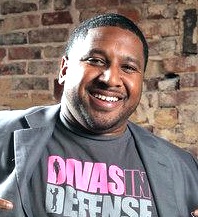


 Steve Shlansky, founder of GO! Productions, tells a group of Grady High School students the story of how he created his firm and how he overcame obsticles in his career by always keeping a hand in the craft that he loves.